
Tuesday, 31 January 2012

British Board Of Film Classification
British Board of Film Classification

The British Board Of Film Classification is an independent non governmental body. It has been classifying cinema films since it was set up in 1912 and video recordings in 1984. However the BBFC doesnt just come up with these guidelines they use extensive consultation and research from the public, they also take the UK laws and legislations into account. The guidlines are reviewed every 4 years.
There are 4 main areas which are considered:
- Nudity/Sex
- Violence/Imitable behaviour
- Discrimination
- Language

12/12A - These categories are awarded to those who are aged 12 and over. The 12A classification is for cinema only and so they can only see 12A films when accompanied by an adult. For a 12 rating no one under the age of 12 may buy or rent a 12 rated video.
Aggressive discrimination is unlikely to be seen in a 12/12A rated film. Dangerous behaviour (for example suicide) should not be allowed in detail which could be copied by a younger audience. The use of weapons should not be shown inappropriately. Sexual violence should only be implied and not shown in detail. Moderate language is allowed, repeated strong language in a film will be classified as a higher rating. Nudity and sex is allowed, but must be brief and discretely shown.
 15 - This category is for those 15 and older. People under the age of 15 cannot watch a 15 rated film in the cinema, or rent a 15 rated DVD/video.
 Discrimination should not be seen on 15 rated films. There should not be detailed scenes of imitable, dangerous behaviour which can be copied by the young audience. There may be frequent use of strong language in 15 rated films, but the strongest terms should not be frequently repeated throughout the film. Nudity is allowed, but in sexual terms it should not be strongly detailed, however there are no limits on nudity in a non sexual or educational context. Sexual activity may be shown but without strong detail, and some strong verbal references to sexual behaviour may be shown. Violence may be strong, but should not focus on the pain or injury, and there may be references to sexual violence, but if any physical sexual violence occurs it should be discreet and have a strong contextual justification.
Sound and Music in Thriller Films

 In the Panic Room opening sequence there is a non diagetic music sound track which start of slow and mysterious then gradually speeds up to create a more dramatic atmosphere and adding suspense with fast pace ticking. There was also diagetic ambient sounds, such as cars and traffic adding realism to the opening scene. The sound track and sound effects were parallel to the visuals and title of the film.
 In the opening sequence of Catch Me If You Can there is a sound track which is non diagetic. This is made up of different instruments and starts with an xylophone, then follows by other instruments such as a saxophone and fast paced violins. The music is parallel with the visuals and title of the film, for example the fast music with the man running away which relates to the title 'Catch Me If You Can' and adding suspense as the audience dont know what he is running away from.
The opening sequence of Se7en includes a non diagetic sound track, however included more diagetic sound effects such as paper cutting, type writer, screams and skin being cut with a blade which are all parallel sounds as they match the quick flashing of visuals on the screen.
 The similarities of all three opening sequences are that they are all parallel as they either match the visuals or the title of the film which creates suspense. In all three openings the music gradually got faster at the end of the sequence, which adds more tension, making the audience on the edge of their seats and want to keep watching. However, there are differences between the three thriller openings, such as in Panic Room and Se7en there is a mix of diagetic and non diagetic sounds, whereas in Catch Me If You Can, there is no diagetic sounds.
 Sub genre analysis - Black swan
Black swan , a psychological mystery thriller which uses generic conventions to emphasise the hybrid sub genre of mystery.
The narrative of the film centres around a female ballet dancer Nina Sayers (Natalie Portman) that wins the lead role of 'swan lake' who is perfect for the role of the 'white swan', although she feels her role is being snatched from her when a new dancer Lily (Mila Kunis) joins the cast of the show, who seems to be grabbing the attention of the dance teacher who Nina is in love with. Nina starts to believe that Lily is after her and her role and slowly loses her mind as she gets into the character more and more, becoming 'the black swan'.
Nina would be seen as the protagonist throughout the film as she is just a sweet ballet dancer at the beginning desperate to be the best, but throughout the film she becomes in danger of herself more and more which shows us she is in peril. Scenes such as after her performing part 1 of swan lake, she goes into her dressing room to find Lily in there who teases her about how she performed, in anger she throws her against the mirror which is smashed to pieces and has stabbed her in the stomach, only to find out she had actually stabbed herself and not Lily who she had imagined to be there. Nina is controlled by her Dance Teacher Thomas Leroy (Vincent Cassel) throughout the film pressurising her to be better than any one else, forcing her to extreme states of mind, this shows us that she is inferior to him and he calls the shots. Thomas would be the antagonist as he limits her freedom and she feels helpless, although he does not harm her or put her in danger.
The narrative presents ordinary situations where extraordinary things happen such as when Nina is being fitted for her dress, she is standing normally in the mirror being measured, when she notices her reflection turning round and stratching red cuts on her back which are not there and she isn't moving. This is also a theme of seeing reflection and optical illusions which emphasise the mystery of the storyline too, as this usually this wouldnt happen in this situation and makes the audience wonder. Another scene is when she is having an argument with her mum and locks her out her room, and her legs suddenly snap into a swan like shape, this usually wouldnt happen and plays with the audiences minds.
Themes of identity are presented alot in this film, one scene that represents doubling is when Nina is walking through an alley dressed in a fluffy white coat and passes another person who she imagines to be her but is dressed in black, this links to the narrative as she plays a white and a black swan in the film. Also throughout the film she keeps seeing a double of herself in the mirror but doing different things to what she is doing at the time. There is also a scene of Nina in the bath as normal and as she goes under water she opens her eyes and imagines herself glaring down smiling at her from above the water, she suddenly sits up and the double image of herself is gone, this emphasises the psychological mystery of the narrative.
All the micro elements in the film help with the urgency and mystery of the film. The camerawork adds emotion in the scene where she is practising her dance for the lead role there is a close up showing deep expressions on her face suggesting to the audience that she her passion for dancing and getting it right and as if she is terrified of failing. A close up is also shown of Nina with sore bloodshot eyes showing confusion and terror on her face when she pulls a feather out her back as if she is turning into a swan. There is a lot of fast mysterious music during the thrilling and weird scenes, as well as elegant and slow music whilst she is dancing both relating to the scenes well. The camerawork ephasised the events in the scenes such as handheld whilst she is dancing as it follows her whilst she is moving but still showing that she is the object the camera is focusing on. An eyeline match is shown when Nina is staring into the dancing studio, it then shows us Lily who Nina is watching very closely as if she is jealous. The lighting has a great effect on the sub genre of mystery. Throughout the film the lighting is very dramatic and dark leaving the audience on the edge of their seats wondering what is going to happen next. linking in with the narrative, it creates suspense and adds mystery to the scenes. The costumes used in this film add realism to the characters such as the perfect pretty ballet outfit Nina wears, and at the end when she looks as if she almost is a swan with her feathery black dress, bold makeup and huge tiara which tells the audience she is playing the black evil swan. Her white feathery dress and white feathers round her head tell the audience that she is dancing as the white innocent swan, both outfits stand out and show the audience she is the main part.

The narrative of the film centres around a female ballet dancer Nina Sayers (Natalie Portman) that wins the lead role of 'swan lake' who is perfect for the role of the 'white swan', although she feels her role is being snatched from her when a new dancer Lily (Mila Kunis) joins the cast of the show, who seems to be grabbing the attention of the dance teacher who Nina is in love with. Nina starts to believe that Lily is after her and her role and slowly loses her mind as she gets into the character more and more, becoming 'the black swan'.
Nina would be seen as the protagonist throughout the film as she is just a sweet ballet dancer at the beginning desperate to be the best, but throughout the film she becomes in danger of herself more and more which shows us she is in peril. Scenes such as after her performing part 1 of swan lake, she goes into her dressing room to find Lily in there who teases her about how she performed, in anger she throws her against the mirror which is smashed to pieces and has stabbed her in the stomach, only to find out she had actually stabbed herself and not Lily who she had imagined to be there. Nina is controlled by her Dance Teacher Thomas Leroy (Vincent Cassel) throughout the film pressurising her to be better than any one else, forcing her to extreme states of mind, this shows us that she is inferior to him and he calls the shots. Thomas would be the antagonist as he limits her freedom and she feels helpless, although he does not harm her or put her in danger.
The narrative presents ordinary situations where extraordinary things happen such as when Nina is being fitted for her dress, she is standing normally in the mirror being measured, when she notices her reflection turning round and stratching red cuts on her back which are not there and she isn't moving. This is also a theme of seeing reflection and optical illusions which emphasise the mystery of the storyline too, as this usually this wouldnt happen in this situation and makes the audience wonder. Another scene is when she is having an argument with her mum and locks her out her room, and her legs suddenly snap into a swan like shape, this usually wouldnt happen and plays with the audiences minds.
Themes of identity are presented alot in this film, one scene that represents doubling is when Nina is walking through an alley dressed in a fluffy white coat and passes another person who she imagines to be her but is dressed in black, this links to the narrative as she plays a white and a black swan in the film. Also throughout the film she keeps seeing a double of herself in the mirror but doing different things to what she is doing at the time. There is also a scene of Nina in the bath as normal and as she goes under water she opens her eyes and imagines herself glaring down smiling at her from above the water, she suddenly sits up and the double image of herself is gone, this emphasises the psychological mystery of the narrative.
All the micro elements in the film help with the urgency and mystery of the film. The camerawork adds emotion in the scene where she is practising her dance for the lead role there is a close up showing deep expressions on her face suggesting to the audience that she her passion for dancing and getting it right and as if she is terrified of failing. A close up is also shown of Nina with sore bloodshot eyes showing confusion and terror on her face when she pulls a feather out her back as if she is turning into a swan. There is a lot of fast mysterious music during the thrilling and weird scenes, as well as elegant and slow music whilst she is dancing both relating to the scenes well. The camerawork ephasised the events in the scenes such as handheld whilst she is dancing as it follows her whilst she is moving but still showing that she is the object the camera is focusing on. An eyeline match is shown when Nina is staring into the dancing studio, it then shows us Lily who Nina is watching very closely as if she is jealous. The lighting has a great effect on the sub genre of mystery. Throughout the film the lighting is very dramatic and dark leaving the audience on the edge of their seats wondering what is going to happen next. linking in with the narrative, it creates suspense and adds mystery to the scenes. The costumes used in this film add realism to the characters such as the perfect pretty ballet outfit Nina wears, and at the end when she looks as if she almost is a swan with her feathery black dress, bold makeup and huge tiara which tells the audience she is playing the black evil swan. Her white feathery dress and white feathers round her head tell the audience that she is dancing as the white innocent swan, both outfits stand out and show the audience she is the main part.
Monday, 30 January 2012
Sub-genre analysis - The Dark Knight
The Dark Knight
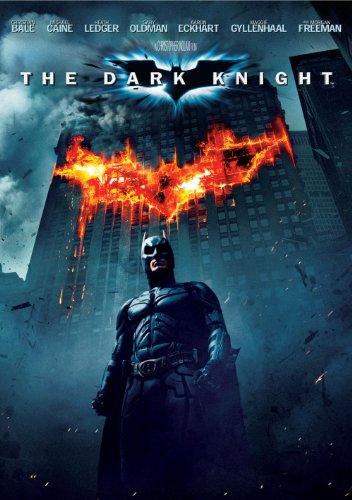

The Dark Knight is a hybrid sub genre of an action and crime thriller which uses specific generic conventions to empashise the action and crime sub genres.
The narrative of the film centres around crime and action between the protagonist; Batman/Bruce Wayne (Christian Bale) who is also known as the hero of the film, and the antagonist; The Joker (Heath Ledger), who are fighting against eachother, with Batman trying to save the city they live in, whilst the Joker is trying his hardest to destroy it. The antagonist has a motive, and this is money, as the narrative focuses on a bank robbery. This scene involves lots of explosions and fighting.
The protagonist (Batman) is seen as weak and falliable in a few of the scenes, one being when the Joker takes the woman he loves, therefore putting her in danger. This is making the antagonist (Joker) in control, with more strength and power over what happens next.
The narrative presents ordinary sitautions, where extraordinary and unexpected events occur, for example the party scene. This is an ordinary event, which changes when the Joker and his sidekicks appears with guns. This shows the audience a lot of violence, which is expected in action crime thriller films, and ends up in the Joker taking the woman that Batman loves.
There is a main protaganist and a main antagonist, but both also have many people on their sides. For example, The Joker has many sidekicks who join him in his crime, who are also dressed the same as him, with very similar make up to make it obvious to the audience they are the antagonists. Batman has the government and public behind him, trying to defeat the Joker.
The title of the film gives the audience an idea that it is going to be a thriller, with crime and action, as by using 'dark', it gives us the impression that there might be mystery and puts a scary twist on the film.
The micro elements also help construct the crime and action sub genre. There is a lot of short shot duration throughout the film, especially in the fighting and explosion scenes. This is creating fright and danger to the audience. There are many establishing shots throughout the film to show the city, and this happens mostly just before a big explosion. By using fast camera movements it creates urgency and suspense to the audience, which also helps create the sub genre of action as we can see that a lot is happening in the scenes. There is fast paced music to add to the action of the scene. This occurs mostly when something bad is about to happen, which then leaves the audience in suspense for the next big bit of action; e.g. a big explosion or a fight between the protagonist and the antagonist. The lighting also has a huge impact on the sub genre of action and crime. The lighting is mostly very dark and gloomy, which also relates to the title of the film; The Dark Knight. The dark lighting adds suspense and tension to the audience, which could also make them feel scared and anxious to what is going to happen next. The dark lighting also then makes the explosions stand out more to the audience, and more realistic. The fact that it is dark suggests most of the crime and action takes place at night time, making it even more scary for the audience. The costumes that the characters are wearing add detail to the sub genre. The Jokers costume and make up looks frightening, and suggests to us that he does not want his real identity revealed, and we can tell that violence is about to occur when Batman is in his costume.
Batman is known as two people in the film, Batman and Bruce Wayne. When action is about to take place, he changes from Bruce Wayne; a normal man, into Batman; a hero.
Tuesday, 24 January 2012
Taken - Generic Conventions
TAKEN

Taken, a action crime thriller film uses typical generic conventions to emphasise the sub genre.
The narrative of the film centres around crime and abduction of a retired CIA agent's(Bryan Mills) teenage daughter who goes on holiday with her friend to Paris. The film involves her father, the protagonist, searching for his daughter throughout the whole film.
The weakness in Bryan Mills (Liam Neeson) is that his daughter has been abducted, and so people can make him do things in desperation to get his daughter back, which includes murder. He is seen in peril throughout the whole film, especially towards the end when he comes closer to getting his daughter, as a lot of violence is involved, which is life threatening towards him. An example of this would be when the antagonists have captured him and attached him to a metal pole, which makes the protagonist fallible and weak, at least this is what is portrayed, until he fights against them.
There is more than one antagonist, as almost everyone else in the film are against Bryan. This is because most of the other characters are involved in the abduction of his daughter, and are determined that he does not get her back, as they do not want to upset their boss, who we see at the end of the film.
The narrative shows us an ordinary situation, where an extraordinary event occurs. One of the girls are dancing to music in the lounge, where the other girl can see her from the bathroom. She is on the phone to her father (Bryan Mills) when she witnesses two large men enter the apartment and take her friend.
In the scene where the two girls get abducted, the micro areas help to add urgency and suspense, and tell the audience that it is a thriller. The camerawork helps add realism and gives the audience an understanding of what is about to happen. There are close ups of her face whilst she is on the phone to her dad, which shows her crying, and so we can tell she is scared. There are also handheld shots used when it shows the view of her friend being taken in the lounge. This creates urgency and danger, and so makes the audience nervous and wonder what is going to happen next. There is an eyeline match of the daughter when she looks over to the lounge at her friend, with a close up of her looking scared and shocked, and so we see why when the camera turns to what she is looking at - the two men in the apartment. There are sound effects that are sharp and quick, which occur when the men enter the apartment. These are parallel sounds as they match what is happening in the scene.
The title of the film relates well to the weakness, as by using the word 'taken', it relates well to the narrative of the film.
Subscribe to:
Posts (Atom)